
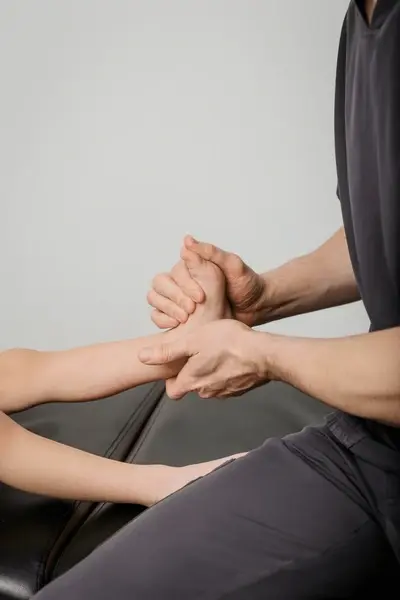
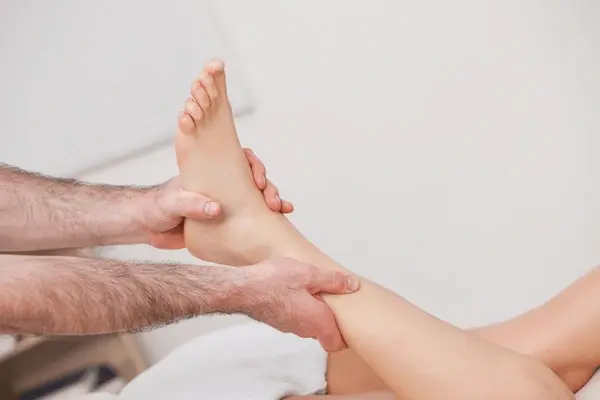
Do your feet or ankles hurt when you walk? Does it feel like a dull ache that does not go away? You might have tendonitis. Foot or ankle tendonitis can make walking, standing, exercising, and daily activities uncomfortable.
At University Podiatry Group, we provide tendonitis treatment to help reduce pain, support healing, and improve movement. Our podiatrists examine your foot or ankle, identify which tendon may be involved, and create a treatment plan based on your symptoms and activity level.
Tendonitis is inflammation or irritation of a tendon. Tendons are strong bands of tissue that connect muscles to bones. In the foot and ankle, tendonitis often develops from overuse, repeated movement, injury, poor footwear, or extra pressure on the foot or ankle.
Common types of foot and ankle tendonitis include:
This affects the tendon at the back of the ankle. It can cause pain, swelling, and stiffness near the heel.
This tendon helps support the arch of the foot. When irritated, it can lead to arch pain, ankle weakness, or changes in foot support.
This affects the tendons on the outside of the ankle. It may cause pain, swelling, or a feeling of ankle instability.
Tendonitis symptoms may start slowly or suddenly. Without proper care, symptoms can become more difficult to manage and may increase the risk of tendon damage.
Common signs include:
Pain in the foot or ankle
Swelling or tenderness
Stiffness
Burning or aching discomfort
Difficulty walking
Pain that gets worse with activity
Weakness or instability
Many things can lead to tendon irritation, including:
Overuse from sports or exercise
Walking, running, or standing for long periods
Poor footwear
Flat feet or high arches
Sudden increase in physical activity
Injury or strain
Age-related wear and tear
At University Podiatry Group, we focus on understanding what may be contributing to your symptoms so treatment can be more targeted.
Treatment depends on which tendon is affected, how severe the irritation is, and what activities are adding stress to the area.
Reducing movements that strain the tendon can give the area time to calm down and recover.
Ice, medication, or other therapies may be recommended to help reduce swelling and discomfort.
Custom orthotics may help support your feet, improve alignment, and reduce pressure on sore tendons.
A brace or walking boot may be used to protect the tendon and improve stability while it heals.
Stretching and strengthening exercises can help improve flexibility, rebuild strength, and lower the risk of future injury.
If symptoms are severe or do not improve with basic care, advanced treatment options or imaging may be recommended.
Your visit to University Podiatry Group is designed to be clear and helpful.
We review your symptoms, medical history, activity level, footwear, and any previous injuries.
Our podiatrist checks your foot or ankle for swelling, tenderness, strength, movement, and signs of tendon irritation.
X-rays, ultrasound, MRI, or other imaging may be recommended if we need to check for tendon damage, bone concerns, or another cause of pain.
We explain what may be causing your pain and review treatment options in simple language.
Follow-up visits may be recommended to track your healing and guide your return to normal activity.
Not every case can be prevented, but simple steps may lower your risk:
Wear supportive shoes.
Stretch before and after exercise.
Increase your activity slowly.
Rest when your pain starts.
Replace worn-out shoes.
Use orthotics or braces if recommended.
Regular podiatry visits may also help catch small issues before they become more painful.
University Podiatry Group proudly provides tendonitis care through multiple convenient locations.
Choosing the right podiatrist matters. Patients choose our office because we offer:
Experienced podiatric care
Personalized treatment plans
Modern diagnostic tools
Long-term support
Patient-centered service
You do not have to keep dealing with foot or ankle pain every day. If tendon pain is making walking, working, or daily activities difficult, University Podiatry Group is here to help.
Call us today or request an appointment online.
Healing time depends on the tendon involved and how severe the irritation is. Some patients improve in a few weeks, while more persistent cases may take several months.
You may need to reduce or modify activity while the tendon heals. Low-impact activities such as swimming or cycling may be easier on the foot or ankle.
Most cases improve without surgery. Surgery is usually considered only for severe tendon damage or symptoms that do not improve with other treatment.
Tendons can feel stiff after rest. When you take your first steps, the tendon may suddenly stretch and cause pain or tightness.
It can return if the tendon is overloaded again. Supportive shoes, stretching, gradual activity changes, and follow-up care can help lower the risk.