
Hammertoe Treatment
Hammertoe Treatment Near You
Does one of your toes look bent or curled downward? Does it hurt when you wear shoes? You might have a condition called hammertoe. At University Podiatry Group, we treat hammertoe and help patients understand their treatment options.
Our podiatric team can examine your toe, check how flexible the joint is, and recommend care based on your symptoms. We want to help reduce your discomfort and support better movement in your daily life.
What Is Hammertoe?
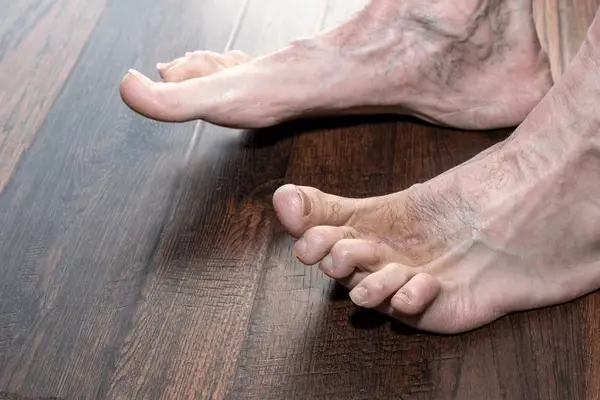
Hammertoe is when a toe bends abnormally at the middle joint. Instead of lying flat, the toe curves downward, often looking like a hammer. This usually happens to the second, third, or fourth toe.
Over time, the bent position can become more rigid if it is not treated.
Common signs of hammertoe include:
A toe that looks bent or curled
Pain or pressure when wearing shoes
Corns or calluses on top of the toe or at the tip
Redness or swelling around the toe joint
Stiffness in the toe
Pain in the ball of the foot
Trouble finding shoes that fit comfortably
Why Choose Hammertoe Treatment?
Hammertoe may start with mild discomfort, but it can become more painful over time. The toe may become stiff, rub against shoes, and cause corns or calluses.
Treatment may help:
Reduce pain and pressure
Improve shoe comfort
Support toe movement
Reduce rubbing and skin irritation
Improve walking comfort
Help you understand whether surgery may be needed
What Causes Hammertoe?
Hammertoe can develop when the muscles and tendons in the toe become imbalanced. This imbalance can pull the toe into a bent position.
Common causes and risk factors include:
Shoes that are too tight, narrow, or short
High heels or shoes with a small toe box
Muscle imbalance in the foot
Family history of toe deformities
Foot injury or trauma
Arthritis or joint problems
Diabetes or other conditions that affect the feet
Hammertoe Treatment Options
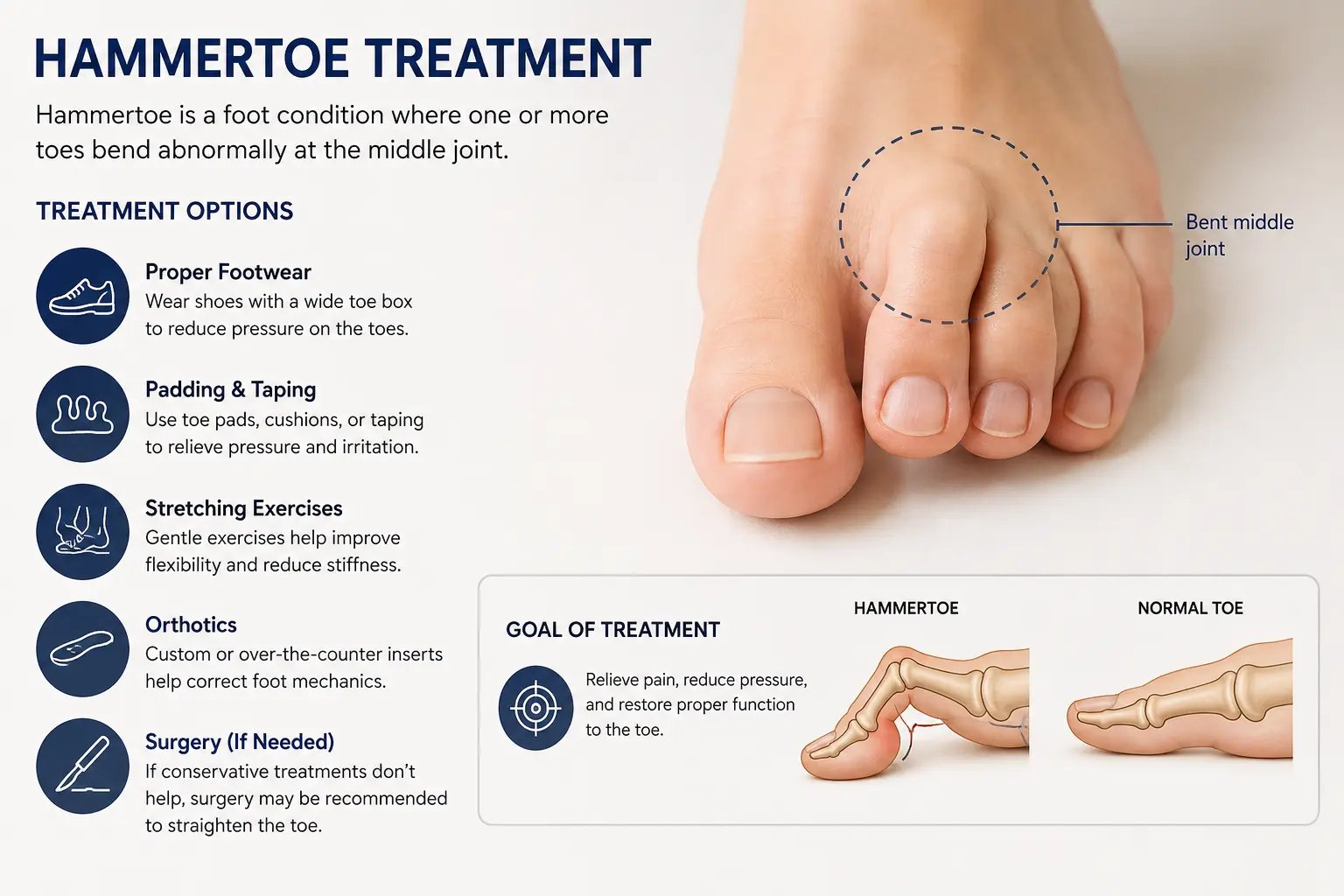
At University Podiatry Group, we usually start with non-surgical treatments, especially if the toe is still flexible. We may consider surgery if the toe becomes rigid or non-surgical treatments do not help.
Non-Surgical Treatment
- Footwear changes: Wider shoes with a deeper toe box can reduce pressure on the bent toe.
- Orthotics and padding: Shoe inserts, corn pads, or cushions may help reduce pressure and friction.
- Strapping or splinting: A splint or strap may help support the toe in a better position.
- Exercises and stretching: Toe exercises may help improve flexibility and muscle balance.
- Anti-inflammatory care: Medication or injections may be recommended in some cases to reduce pain and swelling.
Surgical Treatment
If the hammertoe is rigid or continues to cause pain despite non-surgical care, we may consider surgery. Hammertoe surgery may involve releasing tight tendons, removing part of the joint, or realigning the toe. The recommended procedure depends on the severity of the deformity and your overall foot health.
What to Expect During Your Visit
Initial Consultation
We review your symptoms, medical history, footwear, activity level, and how long the toe has been bent.
Detailed Examination
Our podiatrist checks the toe position, flexibility, skin irritation, corns, calluses, and how the toe moves.
Diagnostic Testing, if Needed
X-rays may be recommended to check joint alignment and the severity of the hammertoe.
Treatment Plan
We explain what may be causing your symptoms and review your treatment options in simple language.
Follow-Up Care
Follow-up visits may be recommended to check your comfort, adjust treatment, or discuss next steps.
Preventing Hammertoe Symptoms From Getting Worse
Not every hammertoe can be prevented, but some steps may help reduce pressure and irritation:
Wear shoes with enough room for your toes.
Use padding or orthotics if recommended.
Stretch and move your toes regularly.
Seek care if toe pain, stiffness, or rubbing continues.
Locations We Serve
University Podiatry Group provides hammertoe treatment at several convenient locations.
Westwood Office
Santa Monica Office
Torrance Office
Santa Clarita Office
Porter Ranch Office
Westlake Village Office
Why Choose University Podiatry Group for Hammertoe Treatment?
We focus on careful evaluation, clear communication, and practical treatment plans.
Our care includes:
Experienced podiatric care
Personalized treatment plans
Modern diagnostic methods
Non-surgical and surgical treatment options
Friendly and supportive care
Support for long-term foot health
Book Your Hammertoe Consultation Today
Do not wait for toe pain or stiffness to get worse. If hammertoe is making it hard to wear shoes or walk comfortably, University Podiatry Group is here to help.
Contact us today to schedule your appointment.
FAQs
Will my hammertoe go away on its own?
Hammertoe usually does not go away on its own. If the toe is still flexible, non-surgical care may help reduce symptoms and slow progression. A rigid hammertoe may need more advanced treatment.
Does hammertoe surgery hurt?
Anesthesia is used during surgery so you should not feel pain during the procedure. Afterward, soreness and swelling are expected, and we provide instructions to help you recover.
Can I still wear high heels?
High heels can put extra pressure on the toes and may make hammertoe symptoms worse. Our podiatrist can help you choose shoes that give your toes more room.
Can hammertoe come back after treatment?
It is possible, especially if the underlying pressure or footwear issue continues. We can help you understand how to reduce pressure on the toe after treatment.
How long does it take to treat hammertoe?
It depends on the severity. Padding, shoe changes, and orthotics may improve comfort quickly. Surgical recovery can take several weeks or longer, depending on the procedure.