
Shockwave Therapy
Shockwave Therapy Near You
At University Podiatry Group, we know how much foot and heel pain can affect your daily life. Walking to your car, climbing stairs, or even standing in the kitchen can feel like a big task when your feet hurt. That is why we offer shockwave therapy as a non-surgical treatment option for certain chronic foot and ankle conditions.
If you have been dealing with stubborn heel pain or tendon problems that are not improving, shockwave therapy may be one option to discuss with our podiatrist.
What Is Shockwave Therapy?
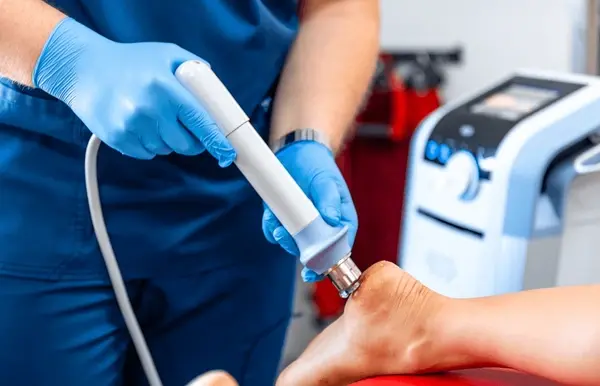
Shockwave therapy is a non-invasive treatment. That means no cuts and no surgery. A small handheld device is placed on the skin over the painful area. It sends sound wave pulses into the tissue below. These pulses are called acoustic shockwaves.
These sound waves may help stimulate your body’s natural healing response, increase local blood flow, and reduce pain in some patients over time.
Shockwave therapy is often used when symptoms have lasted for several months and have not improved enough with treatments such as stretching, supportive shoes, orthotics, or physical therapy.
Why Choose Shockwave Therapy?
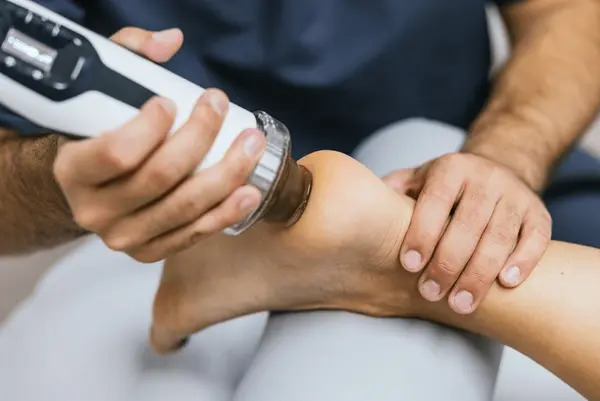
Shockwave therapy may be helpful for patients who want a non-surgical option for ongoing foot or heel pain. It can be used as part of a broader treatment plan, not always as a stand-alone solution.
Shockwave therapy may help:
Reduce pain in some chronic foot conditions
Support healing in irritated soft tissue
Improve walking comfort over time
Offer an in-office treatment option
Reduce the need for more invasive treatment in some cases
Help patients return to daily activities with less discomfort
Results can vary, and some patients may need several sessions.
What Foot Conditions Does Shockwave Therapy Treat?
At University Podiatry Group, our podiatrists may use shockwave therapy for foot and ankle conditions that have not improved with basic care alone.
Shockwave therapy may be recommended for:
Plantar fasciitis
Ongoing heel pain caused by irritation of the plantar fascia, the strong tissue band that supports the bottom of your foot.
Achilles tendinopathy
Pain, tightness, or stiffness in the Achilles tendon, which connects your calf muscles to your heel.
Heel pain
Chronic heel discomfort that has not improved with other treatments.
Chronic tendinitis
Long-lasting tendon pain that has not responded well to rest, stretching, or other non-surgical treatments.
Metatarsalgia
Pain, soreness, or swelling in the ball of the foot that can make standing or walking uncomfortable.
Our goal is to help reduce pain, support healing, and improve your foot function without surgery whenever possible.
How Does a Shockwave Therapy Session Work?
Here is what you can expect when you come in for treatment:
Our podiatrist examines your foot and confirms the treatment area.
A small amount of gel is applied to your skin, similar to an ultrasound exam.
The shockwave device is placed on the skin.
You may feel mild tapping, pressure, or aching during the session.
The session usually takes about 15 to 20 minutes.
You can often return to light activity the same day.
Your podiatrist will explain what activities to avoid after treatment, especially if your condition involves tendon or fascia irritation.
Is Shockwave Therapy Right for You?
Shockwave therapy may be considered if you:
Have had heel or tendon pain for several months
Have tried non-surgical treatments without enough relief
Want to avoid or delay more invasive treatment
Are looking for an in-office treatment option
Can follow your aftercare and activity instructions
Shockwave therapy may not be suitable if you are pregnant, under 18, have an infection or tumor in the treatment area, have certain implanted cardiac devices, or recently had a steroid injection in the same area.
Patients using blood-thinning medication or those with reduced sensation, neuropathy, poorly controlled high blood pressure, osteoporosis, or metal implants in the treatment area may need individual assessment first.
Locations We Serve
University Podiatry Group offers shockwave therapy consultations at multiple convenient office locations.
Westwood Office
Santa Monica Office
Torrance Office
Santa Clarita Office
Porter Ranch Office
Westlake Village Office
Why Choose University Podiatry Group for Shockwave Therapy?
At University Podiatry Group, your foot health is our focus. We take time to understand your symptoms, explain your options, and recommend care based on your condition.
Patients choose us because we offer:
Experienced podiatric care
Modern shockwave equipment
Personalized treatment plans
Clear explanations in simple language
Comfortable office visits
Follow-up care when needed
We treat you like a real person, not just a chart number.
Book Your Shockwave Therapy Consultation
You do not have to keep pushing through foot or heel pain. If your symptoms are not improving with basic care, University Podiatry Group can help you find out whether shockwave therapy may be right for you.
Call us today or request an appointment online.
FAQs
Does shockwave therapy hurt?
Most patients feel mild tapping, pressure, or aching during the session. Some areas may feel tender because they are already irritated. Numbing medication is usually not needed.
How many sessions will I need?
Many patients need several sessions. The exact number depends on your condition, pain level, and how your body responds.
Can I go to work after the treatment?
Many patients can return to light activity the same day. We may ask you to avoid heavy running, jumping, or high-impact activity for a short time after treatment.
Is shockwave therapy covered by insurance?
Coverage depends on your insurance plan and the condition being treated. Our front desk team can help you check your benefits and understand your options.
What is the difference between shockwave therapy and a cortisone injection?
A cortisone injection is used to reduce inflammation. Shockwave therapy uses sound wave pulses to stimulate a healing response in the tissue over time. Your podiatrist can explain which option may fit your condition.