
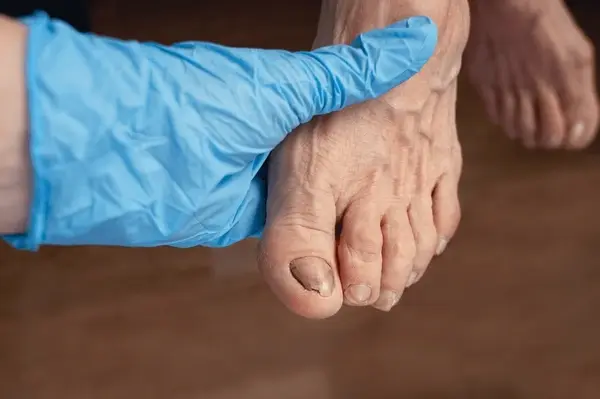

Do your toenails look yellow, thick, or crumbly? You are not alone. Many people deal with this problem and feel embarrassed about showing their feet. The good news is that fungal nail infections are medical conditions that can be treated.
At University Podiatry Group, our podiatrists are here to help. We provide fungal nail treatment to diagnose the problem, reduce nail discomfort, and support healthier nail growth over time.
A fungal nail infection is also called onychomycosis. It happens when fungus gets under or into the nail. Fungus grows best in warm, moist places, such as inside shoes.
Once fungus enters the nail, it can slowly change the look and feel of the nail.
Common signs of a fungal nail infection include:
Yellow, brown, or white nails
Thick or hard-to-cut nails
Brittle or crumbly nails
Nails with an unpleasant odor
Nails that lift away from the nail bed
Mild pain or discomfort when wearing shoes
Fungal nail infections often start in one nail. Without treatment, they may spread to other nails or the surrounding skin.
Fungal nails can be stubborn. They may not improve with regular nail trimming or home care alone. Professional care can help confirm the cause of nail changes and guide the right treatment.
Fungal nail treatment may help:
Confirm whether fungus is causing the nail changes
Reduce thick, brittle, or uncomfortable nail buildup
Make the nail easier to trim and manage
Lower the risk of the infection spreading to other nails or nearby skin
Support healthier nail growth over time
Provide safer care for patients with diabetes, poor circulation, or a weakened immune system
If you have diabetes, it is important to have nail changes checked early. Foot infections can become more serious for patients with diabetes.
Are over the age of 60
Walk barefoot in public places such as pools, gyms, or locker rooms
Sweat heavily in your shoes
Have a weakened immune system
Had a previous nail injury
Wear tight or poorly ventilated shoes
At University Podiatry Group, your treatment may include:
Medicated solutions, creams, or nail treatments may be applied directly to the nail.
Pills may be recommended for more stubborn or widespread infections.
Laser treatment may be considered in some cases to improve nail appearance.
Our podiatrist trims and thins the infected nail to reduce pressure and help other treatments work better.
Treatment takes time because toenails grow slowly.
Your visit to University Podiatry Group is designed to be simple and clear.
We review your symptoms, medical history, footwear, and any previous treatments you have tried.
Our podiatrist checks the color, thickness, shape, and texture of your nails.
A small nail sample is taken to confirm whether fungus is present.
We explain your options and recommend care based on the severity of the infection and your overall health.
Follow-up visits may be needed to monitor nail growth and adjust treatment if needed.
Are over the age of 60
Wear breathable shoes.
Change socks daily.
Wear sandals in public showers, pools, and locker rooms.
Avoid sharing nail clippers, shoes, or socks.
Trim your nails carefully and keep them at a comfortable length.
University Podiatry Group provides fungal nail treatment through several convenient locations.
Our patients choose us because we focus on clear diagnosis, practical treatment, and long-term foot health.
Our care includes:
Experienced podiatric care
Nail evaluation and testing when needed
Personalized treatment plans
Simple explanations about your condition
Care for seniors and patients with diabetes
Follow-up care to monitor progress
You do not have to hide your feet because of thick or discolored nails. If you think you may have a fungal nail infection, University Podiatry Group is here to help.
Call us today or request an appointment online.
Toenails grow slowly. Even after treatment starts working, it can take several months for the damaged nail to grow out. Full toenail growth may take 6 to 12 months or longer.
Yes, fungal infections can spread through direct contact or shared items such as nail clippers, towels, shoes, or socks. They can also spread from one nail to another.
It is usually best to avoid regular nail polish because it can trap moisture and make it harder to monitor the nail. Our podiatrist can let you know what is safe for your treatment plan.
It is usually best to avoid regular nail polish because it can trap moisture and make it harder to monitor the nail. Our podiatrist can let you know what is safe for your treatment plan.
Fungus can live under the nail plate, where it is hard to reach. Without treatment, the infection may stay the same or get worse over time.